Biomass decline in the Amazon due to deforestation and degradation

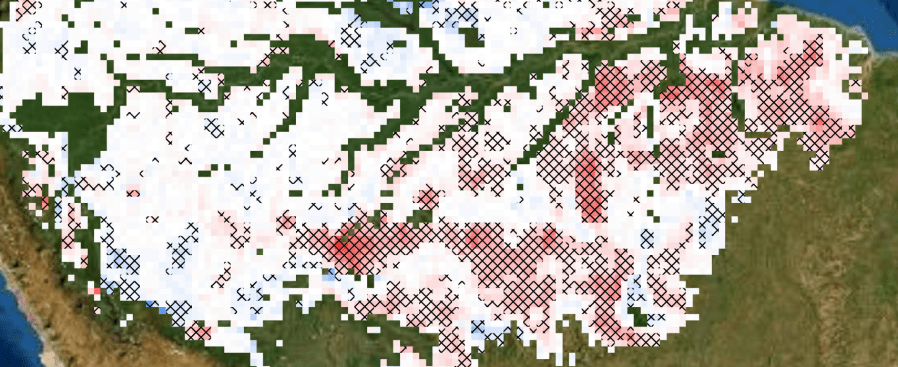
Link to paper The Amazon is the biggest continuous tropical forest on our planet. It has an important function as carbon reservoir (biomass carbon stored in its trees and soil) and carbon sink (taking up more CO2 than it releases). Both of these functions are however under continuous threat from human activities and climate change …

Continue reading Biomass decline in the Amazon due to deforestation and degradation
How well are we modelling the carbon cycle in drylands?

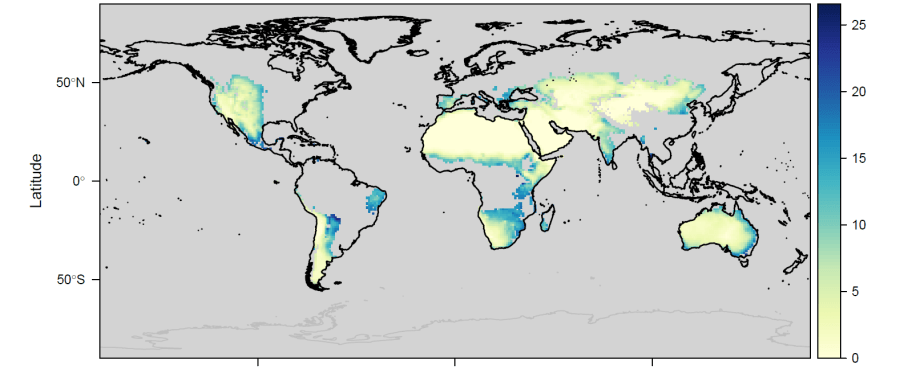
Link to paper Drylands may not be the first ecosystems to come to mind in terms of relevance for the global carbon cycle,  but research has shown that they are very important, particularly for explaining the year-to-year differences in the land carbon sink but also for long-term changes (Ahlström et al., 2015). Many of these …

Continue reading How well are we modelling the carbon cycle in drylands?

How reliable are drone multispectral measurements?

Link to paper With drones being explored as a more proximal and flexible remote sensing tool, miniaturised multispectral cameras (Fig. 1) were quick to follow. The fine resolution spectral information that such systems can provide is exciting as we can monitor individual plant canopies and vegetation elements and it gives us a better idea of …

Continue reading How reliable are drone multispectral measurements?

Measuring oil palms with drone photogrammetry

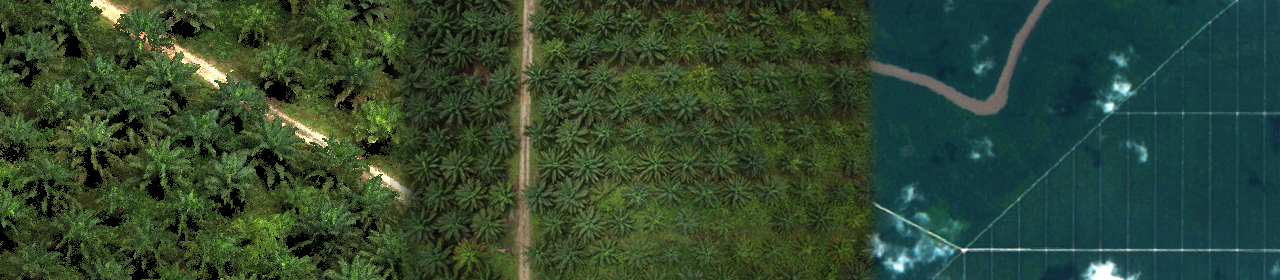
Link to paper In this first published work from my PhD I surveyed an oil palm plantation using drone-based structure-from-motion. Simply put, structure-from-motion (SfM) is the methodology of deriving 3D point clouds from overlapping images by identifying the same tie-points in multiple images taken from slightly different angles. The “motion” refers to the fact that …

Continue reading Measuring oil palms with drone photogrammetry

Better reflectance through more realistic irradiance

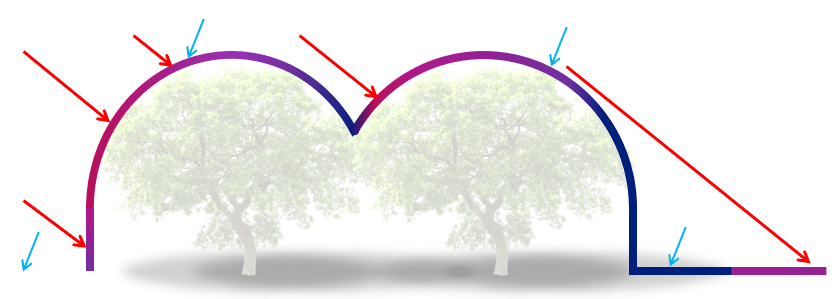
Link to paper Airborne hyperspectral measurements are used to derive the reflective properties of the land-surface from the visible to the near-infrared light and beyond. For vegetation, these reflective properties can be used to gain information on its structure and health. To calculate reflectance from measurements of reflected light (radiance), we need to know the …

Continue reading Better reflectance through more realistic irradiance